

Insert vs Full Frame Window Replacement: What’s Actually Better in Michigan?

If you’re replacing your windows, you’ve probably heard two terms come up:
Insert (or pocket) replacement
Full frame replacement
And depending on who you talk to, one is “the right way” and the other is “cutting corners.”
So which one is actually better?
The short answer:
It depends on the condition of your home and how the installation is done.
Both methods can perform well. Both can also fail if done incorrectly.
The real difference is not just the method.
It’s how much attention is given to the opening, sealing, and long-term water management.
What is an insert (pocket) window replacement?
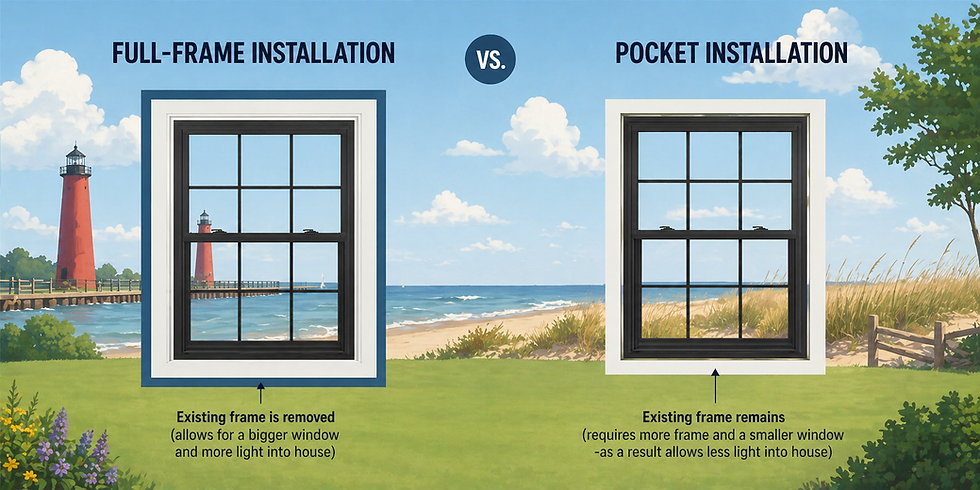
An insert replacement keeps your existing frame in place and installs a new window inside it.
This is typically used when:
The existing frame is still structurally sound
There are no major water or rot issues
You want less disruption to interior and exterior finishes
When done correctly, it’s an efficient and reliable option.
What is a full frame replacement?
A full frame replacement removes everything down to the rough opening.
This is usually necessary when:
There is rot or water damage
The existing frame is out of square or failing
You’re changing size or style significantly
It allows everything to be rebuilt from the opening out.
Where things go wrong?
A lot of the debate around insert vs full frame comes from poor installation practices, not the method itself.
Common issues include:
Skipping proper insulation around the window
Not addressing water management behind the siding
Installing into compromised or damaged openings
Relying on caulk instead of proper sealing systems
That’s when you get drafts, leaks, and callbacks.
How we approach it at Country Window & Door
Most of our projects are insert (pocket) installations.
But we don’t treat them like a shortcut.
We follow InstallationMasters and AWDI guidelines to make sure each opening performs the way it should.
That means:
We don’t assume the opening is good. We verify it.
If there is siding involved, we’ll remove what’s needed to inspect and confirm the structure is sound.
We address the opening before the window goes in.
Any issues with the framing, insulation, or water barrier are handled first.
We focus on sealing, not just setting the window.
Proper foam, flashing approach, and air sealing are what prevent drafts and moisture problems later.
If a window opening isn’t suitable for an insert, we’ll recommend a full frame replacement.
So which one should you choose?
Here’s a simple way to think about it:
If your existing frames are solid and the opening is in good condition, an insert replacement can perform very well when installed correctly.
If there are structural or water-related concerns, a full frame replacement is usually the better route.
The key is making sure the decision is based on the condition of your home, not just the price of the quote.
The mistake to avoid
Choosing based on method alone.
You can have:
A poorly installed full frame window that still leaks
Or a properly installed insert window that performs for decades
The method matters.
But the installation quality matters more.
What should you do next?
When reviewing quotes, ask:
How are you verifying the condition of the existing opening?
What steps are you taking to seal and insulate the window?
Will siding or exterior materials be removed if needed to inspect properly?
If those answers aren’t clear, that’s where problems usually start.
If you want a second set of eyes on your project, we’re happy to take a look and walk you through the best option for your home.


Comments